For many years, one of the most important and least understood features of employment law in Great Britain has been how short the window is for bringing a claim. For most employment tribunal claims, the general time limit has been three months. For someone who has just lost their job or is dealing with a difficult situation at work, three months can pass very quickly.
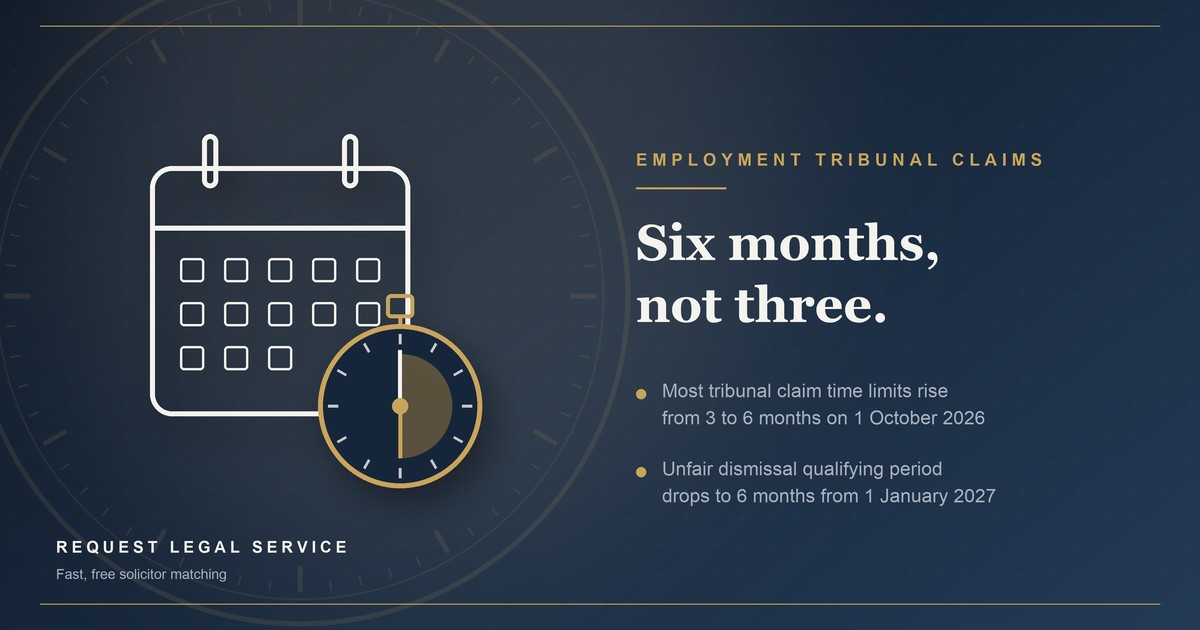
That is changing. Under the Employment Rights Act 2025, the government has confirmed that the time limit for bringing most claims to an employment tribunal will increase from three months to six months from 1 October 2026. This article explains, in general terms, what the change means, what it does not change, and why acting early still matters.
What is changing on 1 October 2026?
According to the government’s published implementation timeline and guidance from Acas, the time limit for making most employment tribunal claims will increase from three months to six months on 1 October 2026. This covers the kinds of claims people most often bring, which can include matters such as unfair dismissal, workplace discrimination and unpaid wages, although the precise rules can differ depending on the type of claim.
There is one notable exception to the date. For breach of contract claims in Scotland, the government has said the change takes effect slightly later, on 9 November 2026.
It is also worth noting that employment tribunals cover England, Wales and Scotland. Northern Ireland has its own separate system of industrial tribunals and its own employment legislation, so these changes should not be assumed to apply there.
Other changes coming in January 2027
The time limit is one part of a wider set of reforms being introduced in stages. From 1 January 2027, the government has confirmed two further significant changes to unfair dismissal:
First, the qualifying period for ordinary unfair dismissal claims will reduce from two years to six months, for dismissals from that date. In general, this means many more employees will be protected against unfair dismissal much earlier in their employment. Second, the statutory cap on compensatory awards for ordinary unfair dismissal is due to be removed.
Taken together, these changes mean that more people are likely to be able to bring a claim, and they will generally have longer to do so.
Why acting early still matters
A longer time limit is welcome, but it is not a reason to delay. In many cases, there are good reasons to take advice sooner rather than later:
Early conciliation comes first. In most cases, before a claim can be lodged with an employment tribunal, the person bringing it must first notify Acas and go through early conciliation. This is a step that needs to be built into any timeline.
Transitional rules can be complicated. Where the events behind a claim happened around the date the new time limit comes in, working out exactly which deadline applies can be tricky. This is an area where it is generally sensible to get guidance from a solicitor rather than assume the longer period applies.
Evidence fades. Emails, messages, payslips and the recollections of colleagues are usually easiest to gather while events are recent. Keeping a clear record of what happened, and when, can make a real difference later.
Some routes run on their own clock. Internal grievance or appeal processes, negotiations over a settlement agreement, and other options can run alongside potential tribunal claims. In general, taking part in an internal process does not automatically pause the tribunal deadline, which is one reason people are often advised to check where they stand early.
When might someone instruct an employment solicitor?
People often look for an employment solicitor when they have been dismissed and believe the reasons or process were unfair, when they have experienced discrimination or harassment at work, when they are owed wages or holiday pay, or when they have been offered a settlement agreement (which, in general, needs to be reviewed by an independent adviser to be valid). A solicitor can look at the specific facts, explain which deadlines apply, and set out the realistic options.
If you are dealing with a workplace issue and are unsure where you stand under the new rules, you can submit a free enquiry through Request Legal Service to be matched with a solicitor who handles employment matters. Submitting an enquiry does not create a solicitor-client relationship, but it can be a quick first step towards getting the right help.
This article is for general informational purposes only and is not legal advice. Laws vary across England & Wales, Scotland, and Northern Ireland, and can change over time — for guidance on your specific situation, speak with a qualified solicitor. Request Legal Service does not act as a law firm or provide legal representation.